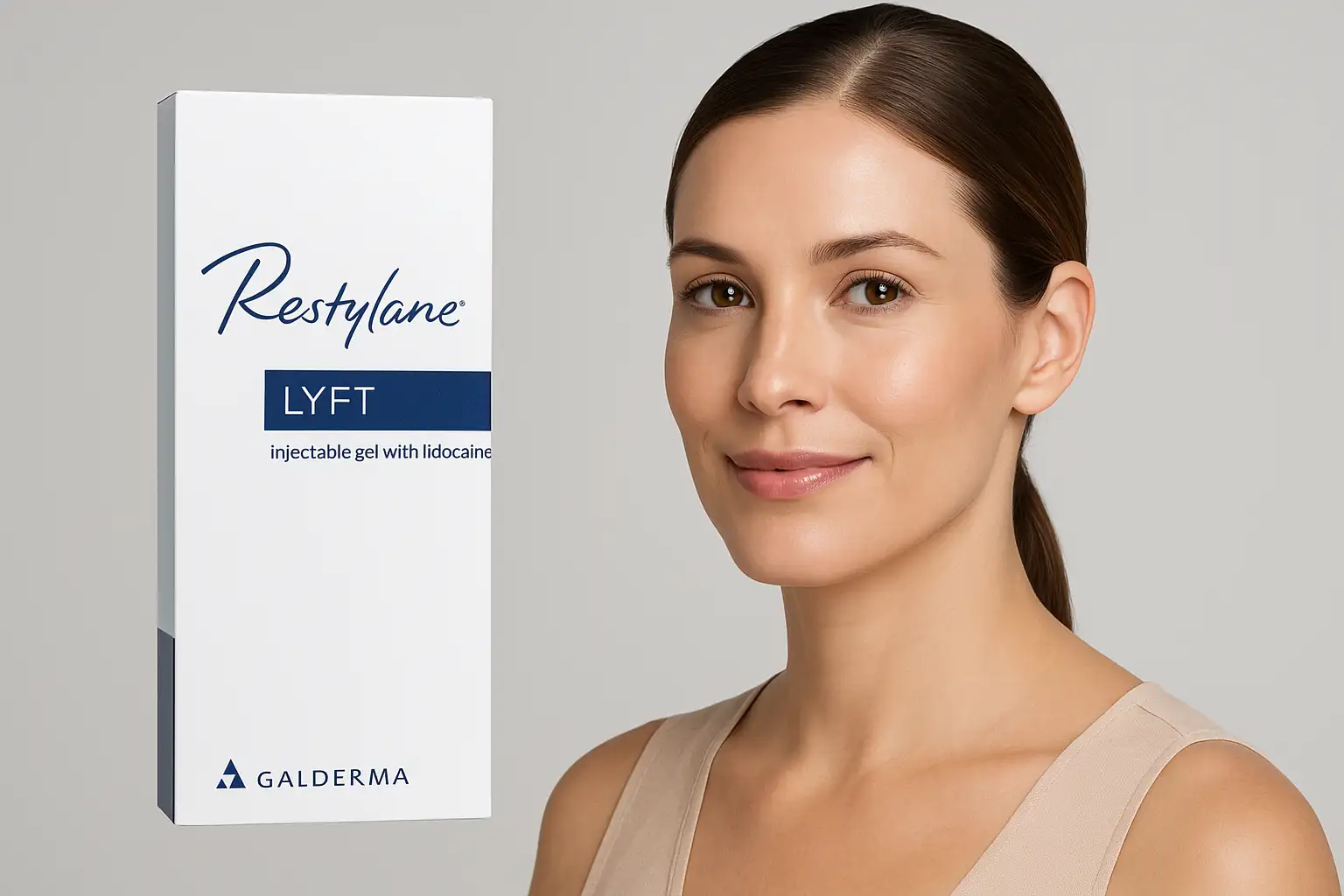
Restylane Lyft
in Torrance
Structural hyaluronic acid support for flattened cheeks, selected folds, and hollow-looking hands.
Restylane Lyft at a Glance
Restylane Lyft in Torrance at Skin Works Medical Spa is a firm, structural hyaluronic acid filler for areas that need real lift, not just soft surface volume. As cheek volume softens and deeper folds form, the midface can look heavier and less defined; the backs of the hands can lose fullness too, making veins and tendons more visible. Lyft is one of the few fillers FDA-approved for both facial structure and hand rejuvenation in appropriate candidates. See the full dermal filler menu for how it compares to other structural options.
What Is Restylane Lyft?
Lyft is a hyaluronic acid based gel engineered with a firmer, more robust consistency than softer Restylane products, giving it the structural strength to lift and contour rather than just fill.
Lyft is often discussed alongside Voluma XC and Radiesse for structural cheek work, and separately for hand rejuvenation in appropriate candidates.
Firm, Structural Consistency
Engineered with a more robust gel structure than softer fillers, built specifically to lift and support rather than simply add volume.
Dual-Purpose: Face and Hands
One of the few fillers used for both facial structure and hand rejuvenation in appropriately screened candidates.
Reversible When Needed
As a hyaluronic acid filler, Lyft can be dissolved with hyaluronidase if medically indicated.
What Restylane Lyft Treats
Lyft is used for structural volume loss in the cheeks, selected folds, and hands. Your provider confirms fit for your specific anatomy at consultation.
| Concern | What Patients Typically See |
|---|---|
| Flattened cheeks | Restored projection and midface support |
| Nasolabial folds (structural) | Softer folds tied to underlying volume loss |
| Hollow, veiny hands | Smoother contour in appropriately screened candidates |
Restylane Lyft vs. Other Structural Fillers
Lyft shares its structural category with two other options. Here’s how they differ.
| Restylane Lyft | Voluma XC | Radiesse | |
|---|---|---|---|
| Base material | Hyaluronic acid | Hyaluronic acid | Calcium hydroxylapatite |
| Best for | Cheeks, folds, hands | Cheeks, chin, temples | Cheeks, jawline, chin, hands |
| Typical duration | 7 to 9 months (cheeks) | Up to 2 years | 12 to 18 months |
| Reversible | Yes | Yes | No |
Lyft is the only one of the three FDA-approved for hand rejuvenation. Voluma lasts longer in the cheeks; Radiesse adds a collagen-stimulating effect but isn’t reversible. Your provider matches the product to your goals and treatment area.
Is Restylane Lyft the Right Choice?
Lyft works best for patients who need clear structural support, not a subtle surface change, whether in the cheeks, selected folds, or hands.
- Want lifted, more defined cheeks without surgery
- Have folds related to volume loss that need deeper support
- Bothered by hollow, veiny hands and are an appropriate candidate for hand filler
- In good general health and not currently pregnant or breastfeeding
When another filler may fit better
Want the longest possible cheek duration: Voluma XC lasts significantly longer.
Want added collagen stimulation and are comfortable with a non-reversible option: Radiesse may be worth discussing.
Fine, superficial lines only: Lyft is too structural for this; a lighter filler is a better match.
Your Restylane Lyft Journey
Consultation & Structural Analysis
Your injector evaluates your facial structure, and hands if relevant, to design a plan that restores missing support.
Treatment Day
Lyft is injected in structural planes, then shaped to build even, natural contours.
Immediate Lift
Structural lift is visible right away, with early swelling, redness, or mild asymmetry common in the first few days.
Full Integration
As swelling resolves, results look more refined and natural.
Maintenance
Hand results vary by activity and metabolism; your injector will discuss a realistic timeline for each area.
Not sure if Lyft or Voluma is the better cheek option for you? Text us and we’ll help you figure it out.
Text Us a QuestionRestylane Lyft Pricing
Final pricing is confirmed at your free consultation based on the number of syringes your goals require.
Frequently Asked Questions
How is Restylane Lyft different from softer fillers?
Lyft has a firmer, more structural consistency, designed to provide lift and support in areas like the cheeks rather than only adding subtle, surface-level volume.
Will Restylane Lyft make my face look overfilled?
When injected conservatively in the correct planes, it restores natural support rather than creating obvious bulk. The focus is on balanced, age-appropriate lift.
Can Restylane Lyft be used in the hands?
Yes, in appropriate candidates. Your injector evaluates skin thickness, volume loss, and medical history to confirm hand treatment is safe and suitable.
Is Restylane Lyft painful?
Most patients find it very tolerable. The product contains lidocaine, and additional numbing can be used. You may feel pressure or brief stinging that improves as the area numbs.
Can Restylane Lyft be dissolved if needed?
Yes. As a hyaluronic acid filler, it can be dissolved with hyaluronidase if medically indicated.
How much swelling or bruising should I expect?
Swelling and small bruises are common and typically mild. Cheek and hand areas can feel full or slightly firm at first, usually improving within a couple of weeks.
How many syringes will I need?
This depends on your starting anatomy, degree of volume loss, and desired correction. Your injector gives a personalized estimate at consultation.
Is Restylane Lyft right for first-time filler patients?
It can be appropriate for first-time patients whose main concerns are structural, such as flattened cheeks or deeper folds. Your injector discusses your comfort level and options at consultation.
Restylane Lyft in Torrance and the South Bay
Visit us at 2573 Pacific Coast Highway, Suite B in Rolling Hills Plaza, Torrance, with free parking and freeway access. We regularly see patients from across the South Bay, including Redondo Beach, Manhattan Beach, Hermosa Beach, Palos Verdes, Gardena, Carson, Lomita, and San Pedro.
Complimentary Consultations Available Ready for Real Structural Support? Restylane Lyft rebuilds cheek structure and can restore hand fullness in one versatile filler. Your provider builds a plan around your anatomy at your free consultation. |
Medical Disclaimer: Restylane Lyft is an FDA-approved dermal filler. This page is for informational purposes only and does not constitute medical advice. Individual results vary. Provider evaluation required before treatment.
Pricing: Final pricing is confirmed at your consultation based on the number of syringes required.
Financing: Payment plans are provided by third-party lenders and subject to their approval processes and terms.
Skin Works Medical Spa, Rolling Hills Plaza, 2573 Pacific Coast Highway, Suite B, Torrance, CA 90505, (844) 759-6757