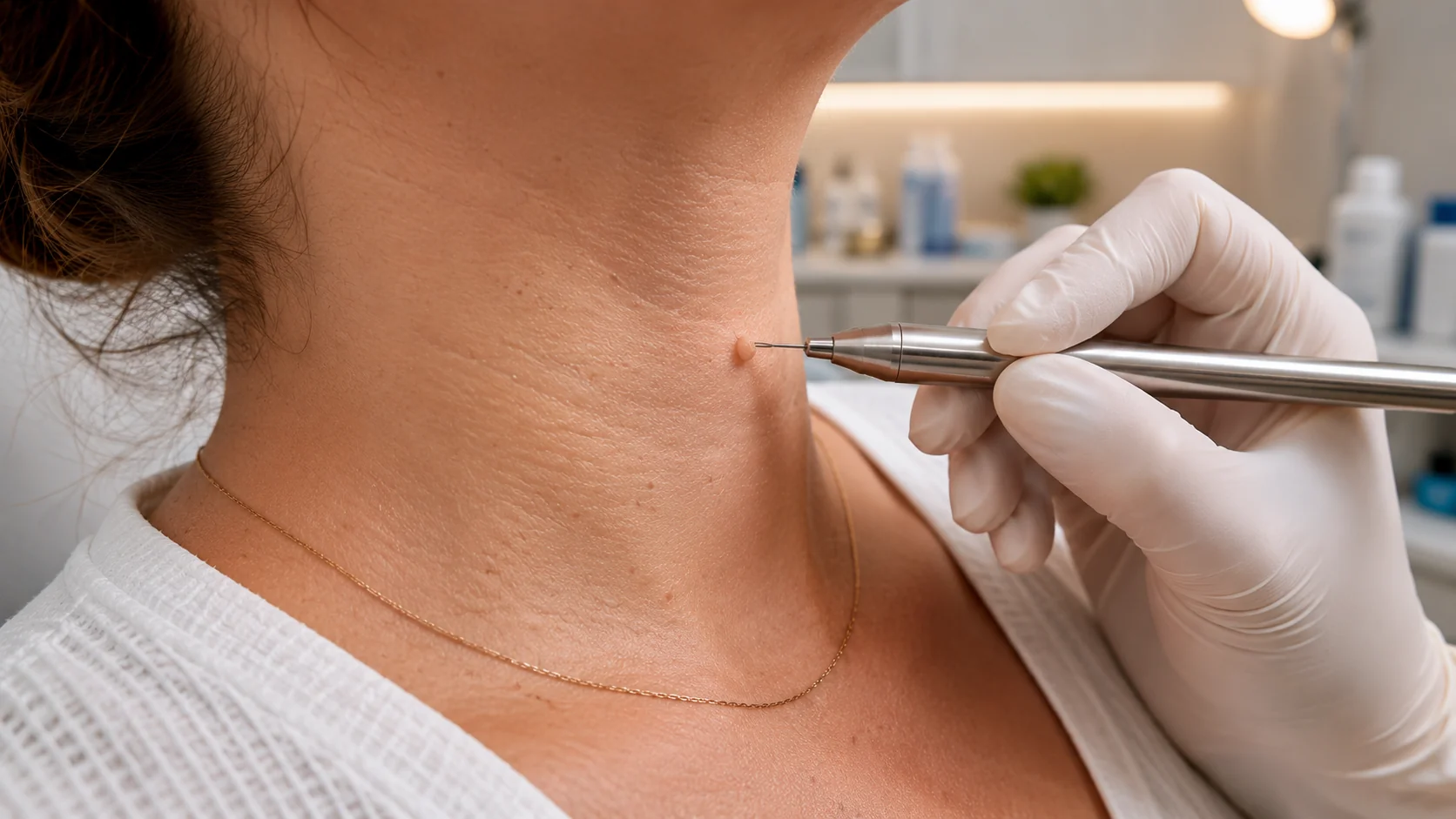
Skin Tag & Mole
Removal in Torrance
Cosmetic removal of selected skin tags and benign-appearing moles after provider evaluation. Suspicious, changing, or uncertain lesions are not treated cosmetically and should be evaluated appropriately first.
Skin Tag & Mole Removal at a Glance
Skin tags are common benign growths, while moles are pigmented lesions that require a different level of evaluation before cosmetic removal. At Skin Works, the first step is examining the lesion and deciding whether it looks appropriate for cosmetic treatment or should be referred for dermatology evaluation or diagnostic biopsy instead. When cosmetic removal is appropriate, the technique depends on the lesion type, depth, location, and the expected cosmetic tradeoff.
Skin Tags vs Cosmetic Moles
Skin tags and moles are different lesions and should not be approached as though they are interchangeable. A changing or suspicious pigmented lesion should not be cosmetically shaved, cauterized, or treated with plasma simply to remove its appearance.
Acrochordons, usually soft benign growths
Skin tags are soft, flesh-colored growths that often develop in friction areas such as the neck, underarms, groin folds, or beneath clothing.
They are generally benign, but a growth that does not clearly look like a typical skin tag should be examined before removal.
How we approach them: After evaluation, selected skin tags may be removed using an appropriate office technique based on size and location.
Pigmented nevi that require lesion assessment first
Moles, or nevi, are common pigmented skin lesions. Many are benign and stable, but appearance alone cannot rule out every concerning diagnosis.
If a mole is changing, asymmetric, irregular, unusually colored, symptomatic, or otherwise suspicious, cosmetic removal is deferred and appropriate dermatology evaluation or biopsy is recommended.
How we approach them: For a lesion that is clinically appropriate for cosmetic treatment, the provider discusses shave removal, excision, or another method based on depth, location, and scarring tradeoffs.
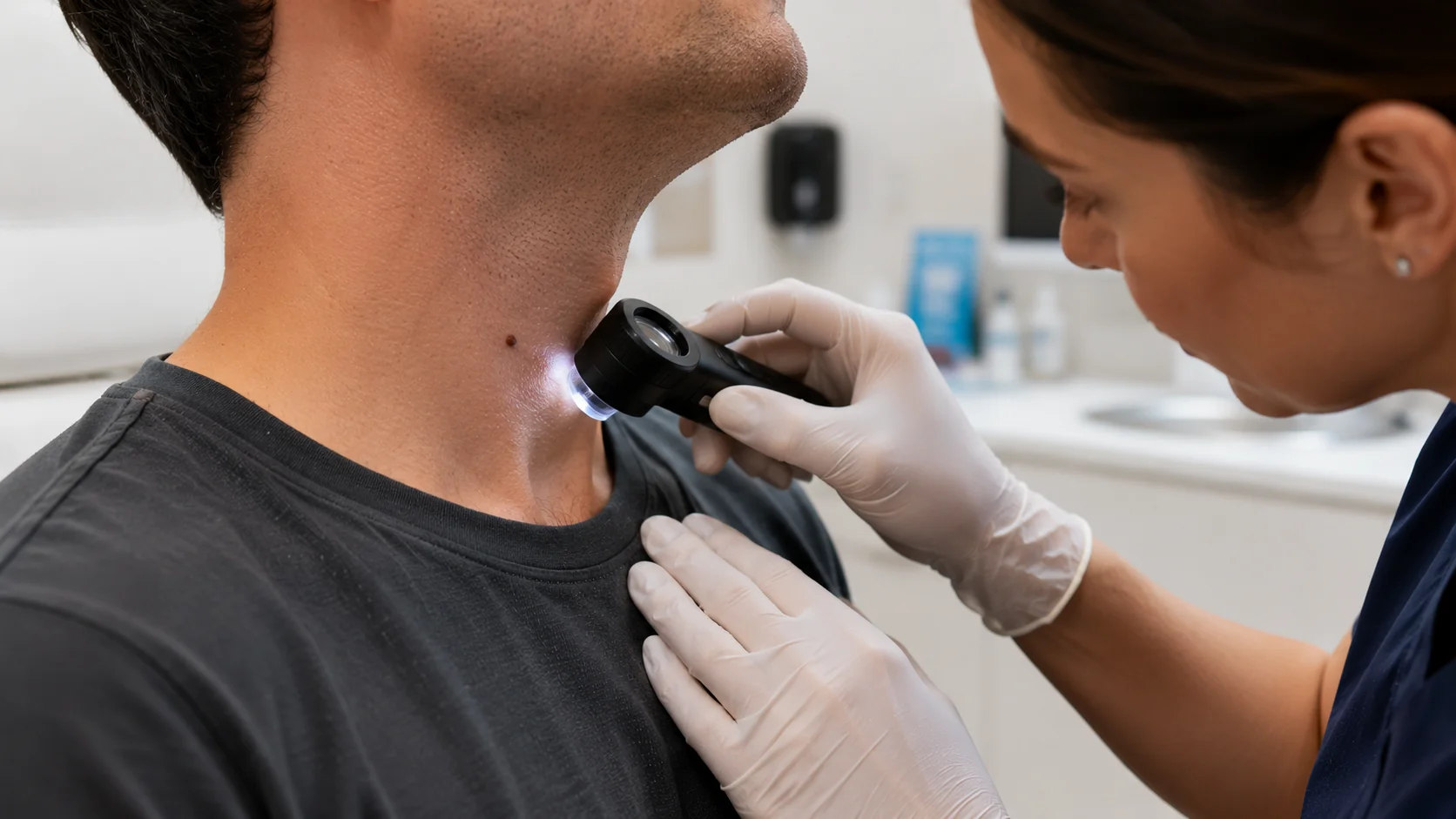
Dermatoscope examination can provide a closer clinical view of a lesion, but it does not replace pathology when a biopsy is needed.
Who May Be a Candidate?
Every lesion is examined before treatment. The goal is not to make a definitive diagnosis from appearance alone, but to decide whether cosmetic removal is reasonable or whether the lesion needs diagnostic evaluation first.
- Typical skin tags that are stable and clinically uncomplicated
- Benign-appearing moles without concerning change or symptoms
- Lesions that catch on clothing, jewelry, shaving, or makeup
- Patients who understand that every removal method can leave a mark or scar
- Multiple skin tags when the provider determines they can be treated in one visit
- A mole that is changing in size, shape, color, or symptoms
- Irregular or asymmetric pigmented lesions
- A lesion with spontaneous bleeding, ulceration, or other concerning features
- Any lesion the provider cannot confidently classify as appropriate for cosmetic treatment
- Active infection or another local condition that makes elective removal inappropriate
Safety first. Suspicious pigmented lesions should be evaluated diagnostically rather than cosmetically removed. A dermatoscope can help with examination, but tissue diagnosis requires pathology when a biopsy is indicated.
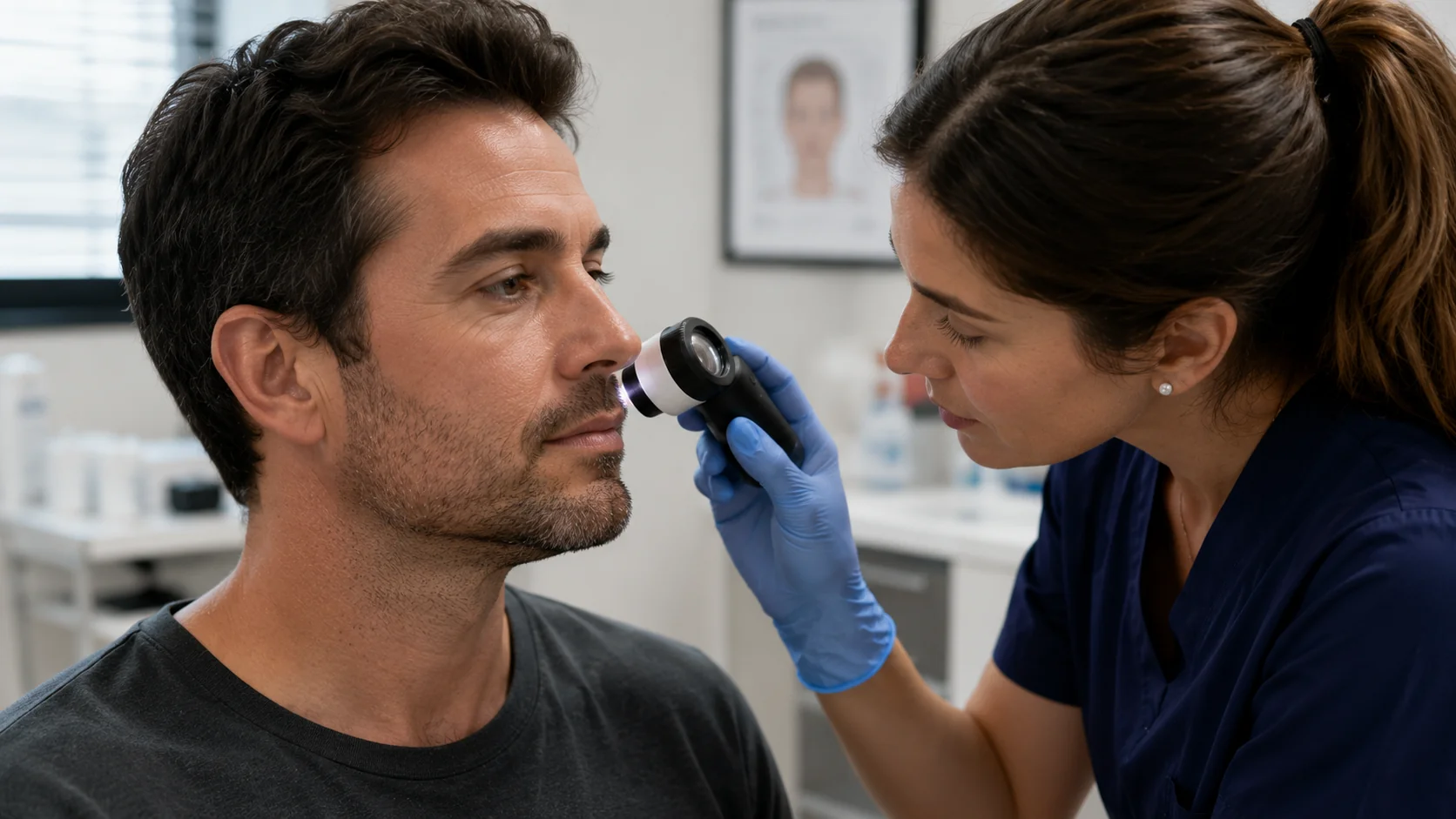
The provider examines the lesion before deciding whether cosmetic removal is appropriate or whether referral or biopsy is the safer next step.
What We Evaluate Before Recommending Treatment
What the lesion appears to be: Skin tags, melanocytic moles, vascular lesions, cysts, and other growths are not treated the same way.
Whether there are warning signs: Change, asymmetry, irregular border, color variation, bleeding, ulceration, or other atypical features can change the next step.
Location and depth: Eyelids, face, neck, skin folds, and deeper lesions require different technique and scar planning.
Skin and healing history: Pigment changes, keloid tendency, prior scars, medications, and local skin conditions can affect treatment planning.
Whether tissue diagnosis is needed: If a lesion is suspicious or uncertain, cosmetic removal is not the priority. Appropriate biopsy or dermatology evaluation comes first.
Your cosmetic goal: We explain the expected finish, healing period, and the possibility of a residual mark or scar before you choose a technique.
Before You Book a Skin Tag or Mole Consultation
Question 1 of 4What would you like us to evaluate?
Has the lesion changed recently?
Where is it located?
How would you like to continue?
Thanks. Choose whichever way you’d like to continue:
How Cosmetic Removal May Be Performed
The method depends on what the lesion is, where it sits, how deep it is, and what scar tradeoff is acceptable. Suspicious pigmented lesions are not treated with a cosmetic destruction technique.
Skin Tag Removal
Selected skin tags may be treated with an office-based removal technique chosen for the tag’s size and location. The provider reviews expected healing before treatment.
Shave Removal
A shave technique may be considered for selected raised benign-appearing moles when an appropriate cosmetic result can be achieved without full-thickness excision.
Surgical Excision
Excision may be considered when complete removal and a controlled linear scar are more appropriate. Whether pathology is needed depends on the clinical situation.
Referral or Diagnostic Biopsy
If a lesion is suspicious or uncertain, cosmetic removal stops being the goal. The provider recommends appropriate dermatology evaluation or biopsy before cosmetic treatment.
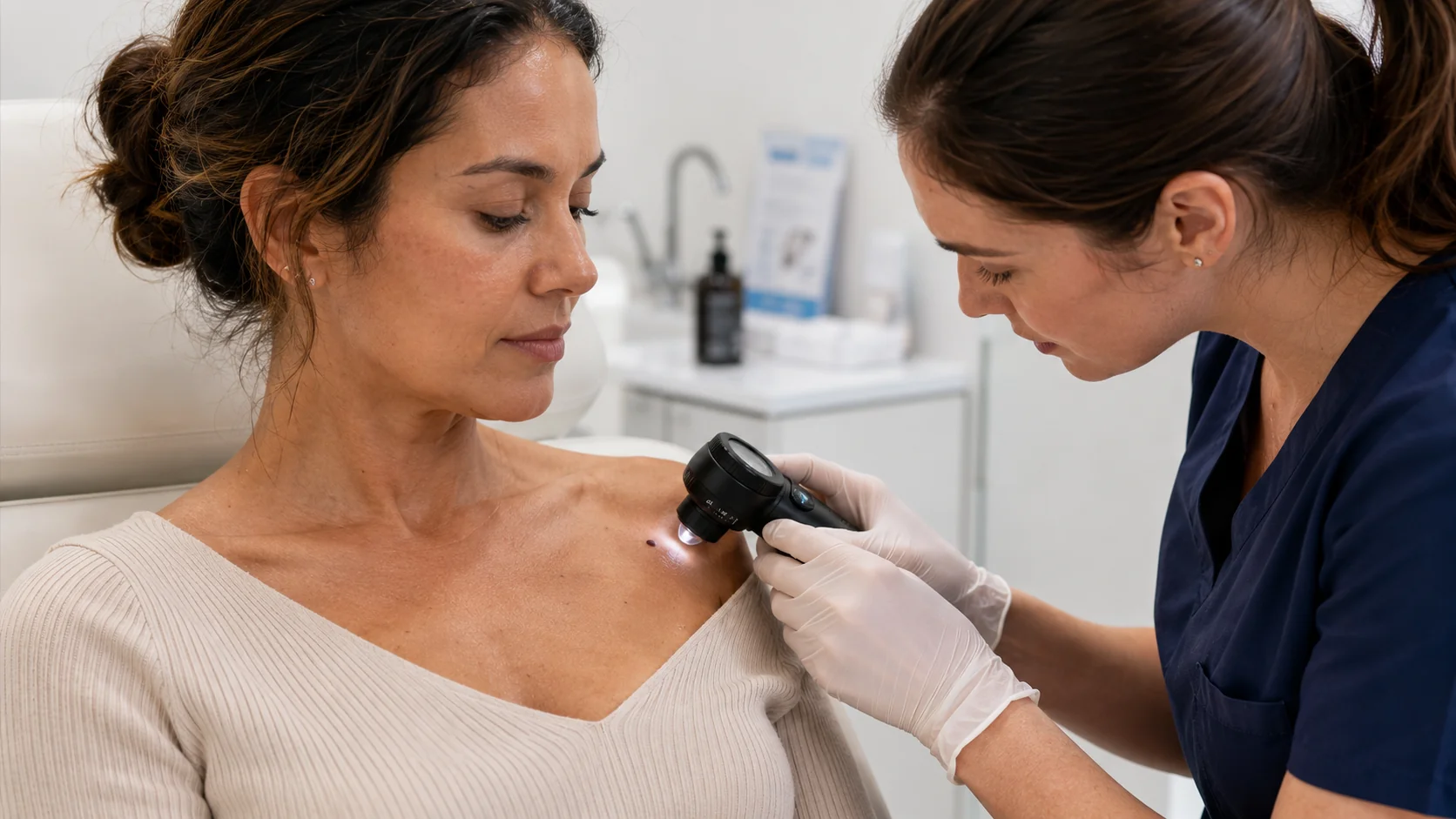
For benign-appearing cosmetic lesions, method selection depends on depth, location, expected healing, and the scar tradeoff.
Cosmetic Removal vs. Medical Evaluation
Typical Skin Tag
Often a straightforward cosmetic concern when the lesion has the classic appearance of a skin tag and the provider finds no reason to defer treatment.
Stable Benign-Appearing Mole
May be considered for cosmetic removal after evaluation, with the technique chosen around depth, location, and expected scarring.
Changing or Atypical Mole
Should be evaluated diagnostically rather than cosmetically destroyed. A suspicious pigmented lesion may require biopsy and pathology.
Uncertain Skin Growth
If the provider is not confident about what the lesion is, the next step may be dermatology evaluation instead of same-day cosmetic removal.
Not sure whether the spot is a skin tag, mole, or another type of growth? Text us a photo or book a consultation so it can be evaluated before treatment.
Text Us a Photo or QuestionWhat to Expect Before and After Removal
Consultation
Before treatmentThe provider examines the lesion, reviews any recent change or symptoms, and decides whether cosmetic removal is appropriate or further evaluation is needed.
Removal
At your appointmentIf treatment is appropriate, the area is prepared and the selected removal method is performed. Local numbing may be used depending on the technique and location.
Healing
After treatmentA small scab, pink area, or incision line may be present depending on the method. You receive specific wound-care and sun-protection instructions.
Follow-Up
If neededContact the office if healing is not progressing as expected. Follow-up may also be recommended if there is residual pigment, recurrence, or a pathology-related next step.
Want to ask whether a lesion needs evaluation first, how multiple skin tags are priced, or what removal method may be considered?
Call (844) 759-6757Pricing
Final pricing is confirmed after the lesion is examined. First-time patients receive 10% off one eligible regular-price treatment on the first visit. If a lesion needs dermatology evaluation or diagnostic biopsy instead of cosmetic removal, the cosmetic service is not performed.
Frequently Asked Questions
What are skin tags?
Skin tags (acrochordons) are small, soft, benign growths that hang from the skin by a thin stalk. They develop in areas where skin rubs against skin or clothing. The neck, underarms, bra line, groin folds, and around the eyelids are the most common locations. They are not contagious, not cancerous, and do not require removal for health reasons.
What are skin growths?
The term “skin growth” covers a range of benign lesions including skin tags, cosmetic moles, cherry angiomas, milia, and cholesterol deposits. Most are harmless and removed for cosmetic reasons. The right treatment depends on the type of growth, its location, and its behavior. Your provider will identify the lesion and explain the appropriate approach at your consultation.
Can skin tags be cancerous?
True skin tags are benign. The important issue is that not every bump that resembles a skin tag is necessarily one, so an atypical or changing growth should be examined before removal.
When should I remove a skin tag?
Whenever it bothers you. Common reasons include snagging on jewelry or clothing, bleeding during shaving, visibility in photos, discomfort in skin folds, or simply preferring smoother skin. There is no medical urgency to remove them, but there is also no reason to keep them if they are a nuisance.
How long does skin tag removal take?
Treatment time depends on the number, size, and location of the tags and the removal method selected. Small groups may be treated during a relatively short office visit after evaluation.
Is there any downtime?
Most skin-tag removals involve local healing rather than surgical downtime, but redness, tenderness, scabbing, pigment change, or a small wound can occur. Aftercare depends on the technique used.
Will there be a scar?
Any procedure that removes or destroys skin tissue can leave a mark or scar. The likelihood and appearance depend on the method, lesion size and depth, location, skin type, healing response, and aftercare.
Is skin tag removal permanent?
A fully removed skin tag generally does not regrow from the same stalk, but people who are prone to skin tags may develop new ones nearby over time.
Can a mole come back?
Recurrence can occur after some removal techniques if nevus cells remain. The provider will explain how the chosen method affects the chance of recurrence and the expected scar.
Can different skin tones be treated?
Different skin tones can require different technique and aftercare because post-inflammatory pigment change and scarring risk vary. The provider evaluates those factors before treatment.
Do you send specimens to pathology?
If a lesion is suspicious or diagnostically uncertain, cosmetic removal should not replace appropriate biopsy and pathology. If tissue is removed and pathology is clinically indicated, the provider will explain the appropriate next step.
What are cherry angiomas?
Cherry angiomas are common benign vascular growths. They are not treated the same way as skin tags or moles, so the provider should identify the lesion before choosing a treatment method.
What are cholesterol deposits?
Xanthelasma are yellowish plaques that often appear around the eyelids. They are different from skin tags and moles and may be associated with lipid disorders, so medical evaluation may be appropriate before cosmetic treatment.
What are milia?
Milia are small keratin-filled cysts, commonly seen around the eyes and cheeks. They are different from moles and skin tags and require their own treatment approach.
How should I care for the area after treatment?
Keep the area clean with gentle cleanser and apply a fragrance-free moisturizer. Use SPF 30 or higher daily on treated areas. Sun exposure during healing can cause pigment changes. Avoid picking, rubbing, or scratching the scab. Do not apply makeup directly over active scabs. Your provider will give specific aftercare instructions based on the technique used.
What is New Patient Pricing?
New Patient Pricing gives first-time Skin Works patients 10% off the regular price of any skin tag or mole removal option on this page, applied automatically to your first visit.
Skin Tag and Mole Removal in Torrance and the South Bay
Skin Works Medical Spa is located at 2573 Pacific Coast Highway, Suite B in Rolling Hills Plaza, Torrance. Hours are Monday to Saturday 9:00 AM to 7:00 PM and Sunday 10:00 AM to 5:00 PM.
Complimentary Consultations Available Have the Lesion Evaluated Before You Remove It We can examine the spot, explain whether cosmetic removal is appropriate, review the likely technique and scar tradeoff, and refer you for diagnostic evaluation when needed. |
Medical Disclaimer: This page is for informational purposes only and does not constitute medical advice or a diagnosis. Cosmetic removal is performed only after provider evaluation.
Suspicious lesions: A changing, atypical, or diagnostically uncertain pigmented lesion should not be cosmetically destroyed. Appropriate dermatology evaluation, biopsy, and pathology take priority when indicated.
Results and scarring: Healing, pigment change, recurrence, and scarring vary by lesion, method, location, and individual healing response. No removal method is scar-free.
Pricing: New Patient Pricing is 10% off one eligible regular-price treatment on the first visit only. Final pricing is confirmed after examination.
Financing: Cherry · Klarna · Affirm · CareCredit options are provided by third-party lenders and remain subject to approval and lender terms. Skin Works Medical Spa, 2573 Pacific Coast Highway, Suite B, Torrance, CA 90505, (844) 759-6757.