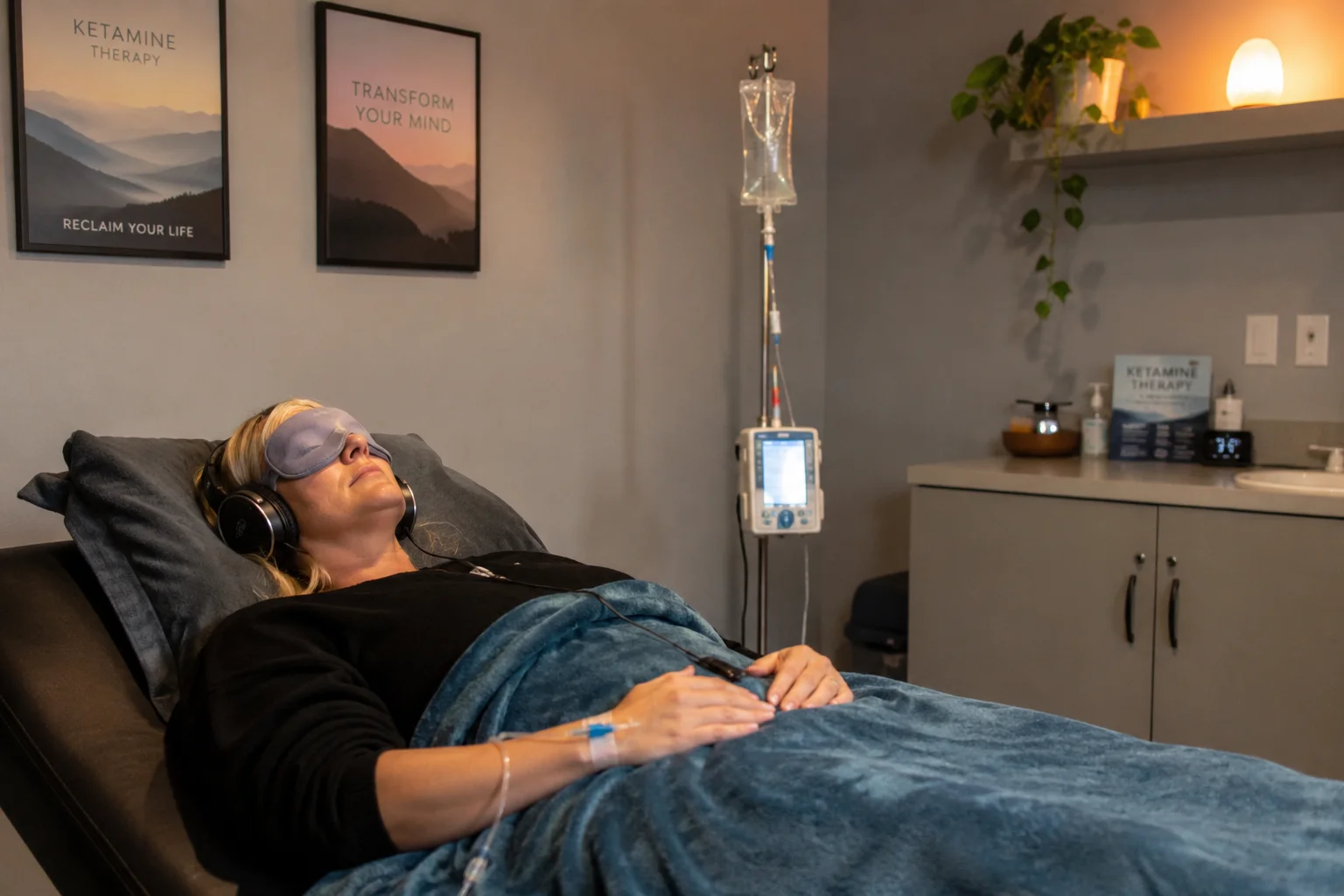
Ketamine Infusion Therapy in Torrance
Clinically supervised IV ketamine infusions considered after medical evaluation for selected patients with treatment-resistant depression, other psychiatric symptoms, or selected pain conditions. Psychiatric and chronic-pain use of IV ketamine is off-label.
Ketamine Therapy at a Glance
Ketamine is a dissociative anesthetic that also affects glutamate signaling in the brain. At subanesthetic doses, IV ketamine has been studied for treatment-resistant depression and other conditions, but response and durability vary. At Skin Works Medical Spa, ketamine is a prescription treatment that requires clinical evaluation, monitored administration, recovery observation, and transportation home after the visit.
What Is IV Ketamine Therapy?
IV ketamine therapy uses prescribed ketamine administered intravenously in a monitored clinical setting. The treatment plan is individualized according to medical history, current medications, psychiatric history, treatment goals, prior therapies, blood pressure, substance-use history, and other safety factors.
Off-Label Psychiatric and Pain Use
Ketamine injection is FDA-approved as an anesthetic. Use of IV racemic ketamine for depression, anxiety, PTSD, or chronic pain is off-label, meaning those uses are not FDA-approved indications for ketamine injection.
Benefits Vary by Condition
Clinical evidence is strongest for rapid antidepressant effects in some patients with treatment-resistant depression. Evidence for anxiety, PTSD, and chronic pain is more condition-specific and should not be treated as equivalent.
Monitoring Is Part of the Treatment
Ketamine can affect perception, alertness, blood pressure, heart rate, and breathing. Clinical monitoring and post-treatment recovery are important parts of an in-clinic infusion visit.
Important: IV racemic ketamine is different from intranasal esketamine (Spravato). Spravato is a separate FDA-approved medication with specific depression indications and a REMS safety program. This page describes IV ketamine infusion therapy.
Who May Be Considered for Ketamine Therapy?
Ketamine therapy is not a first-line or automatic treatment for every psychiatric or pain concern. A clinician must determine whether the potential benefits, uncertainties, and risks make sense for the individual patient.
- Adults with treatment-resistant depression who have had an appropriate clinical evaluation
- Selected patients with other psychiatric symptoms when an experienced clinician determines off-label ketamine is reasonable
- Selected chronic-pain patients after the underlying pain condition and prior treatments have been reviewed
- Patients able to comply with monitoring, recovery, transportation, and follow-up requirements
- Patients who understand that improvement is not guaranteed and maintenance strategies vary
What We Evaluate Before Recommending Ketamine
Diagnosis and treatment history: We review the condition being treated, prior medications or therapies, response to prior treatment, and why ketamine is being considered.
Psychiatric history: Mood symptoms, psychosis or mania history, current mental-health care, acute safety concerns, and other psychiatric risks are reviewed.
Medical history: Blood pressure, cardiovascular history, pregnancy status, liver or urinary concerns, and other conditions that may change risk are considered.
Medications and substances: Prescription drugs, sedatives, stimulants, alcohol or substance use, and potential interactions are reviewed before treatment.
Monitoring and recovery needs: The treatment setting, vital-sign monitoring, recovery time, and transportation home are planned before the infusion.
Ongoing care: Ketamine should not replace needed psychiatric, psychotherapy, primary-care, or pain-management follow-up. Coordination may be recommended.
How Ketamine Affects the Brain
Ketamine is an NMDA-receptor antagonist that alters glutamate signaling. Research in treatment-resistant depression suggests that downstream effects on synaptic signaling and plasticity may contribute to its rapid antidepressant effects in some patients, but the exact mechanism and the durability of benefit remain active areas of study.
NMDA Receptor Antagonism
Ketamine blocks NMDA-receptor activity and changes glutamatergic signaling in ways that differ from conventional monoamine-based antidepressants.
Synaptic Signaling
Research suggests downstream effects on synaptic function and plasticity may be involved in antidepressant response, but this is not a guarantee of clinical benefit.
Potentially Rapid Antidepressant Effect
Controlled studies have found antidepressant effects can emerge rapidly in some patients with treatment-resistant depression. Response may be temporary and is not universal.
Clinical Monitoring
In-clinic IV treatment allows direct observation of vital signs, mental status, adverse effects, and recovery before the patient leaves with arranged transportation.
How IV Ketamine Differs From Other Treatment Approaches
IV Ketamine vs. Standard Psychiatric Treatment
Ketamine may be considered when standard approaches have not provided enough improvement, but it does not replace appropriate psychiatric medication management, psychotherapy, or other ongoing care.
IV Ketamine vs. Esketamine Nasal Spray
IV racemic ketamine and intranasal esketamine are different treatments. Esketamine has specific FDA-approved depression indications and must be administered under its REMS requirements. IV ketamine use for psychiatric conditions remains off-label.
Depression vs. Anxiety, PTSD, and Chronic Pain
The research findings differ by condition. Treatment-resistant depression has the most established evidence for rapid antidepressant effects; evidence for other psychiatric conditions and chronic pain varies by diagnosis, protocol, and study quality.
In-Clinic Infusion vs. Unsupervised At-Home Use
In-clinic IV treatment provides direct monitoring of blood pressure, alertness, adverse effects, and recovery. FDA has separately warned about safety concerns with compounded ketamine products used for psychiatric treatment, particularly when adequate monitoring is not available.
Ketamine Risks and Monitoring
Ketamine can cause clinically important effects during and after treatment. Your clinician reviews the risks that matter for your health history before prescribing an infusion.
Dissociation and Perceptual Changes
Patients may experience altered perception, detachment, dizziness, confusion, anxiety, or other temporary psychological effects during or after treatment.
Blood Pressure and Heart Rate
Ketamine can increase blood pressure and heart rate. Cardiovascular history and baseline vital signs are part of the pre-treatment assessment.
Sedation and Breathing
Sedation can occur, and respiratory depression is a recognized risk, particularly with higher exposure, rapid administration, or other sedating drugs.
Misuse and Dependence Risk
Ketamine is a Schedule III controlled substance with misuse and abuse potential. Substance-use history is relevant to candidacy and follow-up.
Nausea and Recovery Effects
Nausea, vomiting, dizziness, drowsiness, and impaired judgment can occur. Patients need transportation home and should follow post-treatment restrictions.
Longer-Term or Repeated Exposure
Repeated or chronic ketamine exposure has been associated with urinary and other adverse effects. The clinical plan should avoid unnecessary exposure and include reassessment.
Not sure whether IV ketamine is appropriate for your diagnosis, medications, or treatment history? Text us a question before you schedule.
Text Us a QuestionWhat to Expect With IV Ketamine Therapy
Clinical Consultation
Before treatmentYour clinician reviews the diagnosis being treated, prior care, psychiatric and medical history, medications, blood pressure, substance-use history, and whether off-label ketamine is appropriate.
Prescription and Treatment Plan
IndividualizedIf ketamine is appropriate, your clinician sets the dose, infusion duration, monitoring plan, and follow-up schedule for your needs.
Infusion and Monitoring
Duration depends on the prescribed optionKetamine is administered in the clinic while the team monitors the patient and responds to changes in vital signs, alertness, comfort, or adverse effects.
Recovery and Reassessment
Transportation home requiredThe patient remains for recovery until clinically appropriate to leave with arranged transportation. Response and side effects are reviewed before additional treatment is recommended.
Have questions about treatment, recovery, or pricing? Call our team before you book.
Call (844) 759-6757Can Insurance Help Cover Ketamine Therapy?
Insurance coverage for IV ketamine varies significantly by plan, diagnosis, medical-necessity criteria, network status, prior-authorization rules, and plan exclusions. Some patients may have benefits that apply to part of their evaluation or treatment, while other plans specifically exclude off-label IV ketamine for psychiatric or chronic-pain indications.
Want Us to Check Your Insurance?
Text KETAMINE INSURANCE to ask our team about checking your benefits.
Be prepared to send clear photos of the front and back of your insurance card when requested so we can review the plan information needed for the benefits check.
Text KETAMINE INSURANCEPlease note: An insurance benefits check is not a guarantee of coverage, authorization, reimbursement, or payment. Final coverage is determined by your insurance plan under the terms in effect on the date of service.
IV Ketamine Therapy Pricing
Prices are per session. Your clinician recommends an infusion duration and any add-on based on your evaluation and treatment plan. Results vary from person to person.
IV Ketamine Therapy FAQs
What is ketamine therapy?
IV ketamine therapy is a clinician-prescribed infusion using racemic ketamine in a monitored setting. Ketamine injection is FDA-approved for anesthesia; psychiatric and chronic-pain uses of IV ketamine are off-label.
Am I asleep during treatment?
Not necessarily. Subanesthetic ketamine can cause sedation, dissociation, altered perception, dizziness, or a dreamlike sense of detachment. The degree of effect varies by dose and patient, which is why monitoring and recovery observation are required.
How long does a session take?
Infusions range from approximately 20 to 120 minutes. Allow additional time for evaluation, preparation, and recovery. Your clinician will explain the expected length of your visit before treatment.
Can I drive after ketamine therapy?
No. Patients must arrange transportation home after treatment and follow the clinician’s restrictions on driving, operating machinery, alcohol, sedating medications, and other activities requiring normal judgment or coordination.
How quickly will I feel results?
Rapid antidepressant effects have been reported in some patients with treatment-resistant depression, sometimes within hours or days, but response is not guaranteed and may not persist. The evidence and expected timeline are different for anxiety, PTSD, and chronic pain.
Is ketamine therapy safe?
Ketamine has meaningful risks even when used medically, including dissociation, sedation, blood-pressure elevation, nausea, impaired judgment, and possible respiratory effects. It also has misuse and abuse potential. A clinician must determine whether the risk-benefit profile is acceptable for the individual patient.
Who is not a candidate?
Candidacy depends on the diagnosis, blood pressure and cardiovascular history, psychiatric history, substance-use risk, medications, pregnancy status, active medical issues, and other factors. Some patients should not receive ketamine or should receive treatment only in a more specialized setting.
Is this a replacement for my psychiatrist or therapist?
No. IV ketamine should not replace needed psychiatric medication management, psychotherapy, crisis care, primary care, or pain-management follow-up. Coordination with an existing clinician may be appropriate.
What does ketamine therapy cost?
Consultations are free. Serenity Starter Infusion is $380 per session, Deep Renewal Infusion is $720, and NeuroRecharge Therapy is $920. Your clinician recommends an appropriate option after evaluating you.
Is IV ketamine FDA-approved for depression?
No. Ketamine injection is FDA-approved for anesthesia, not for depression, anxiety, PTSD, or chronic pain. IV ketamine for these conditions is off-label. Intranasal esketamine (Spravato) is a different medication with specific FDA-approved depression indications and separate safety requirements.
Does insurance cover IV ketamine therapy?
Coverage varies by insurer and plan. Some plans may provide benefits for certain services or indications, while other plans exclude off-label IV ketamine for psychiatric or chronic-pain treatment. Text KETAMINE INSURANCE to (844) 759-6757 to start a benefits check, and be prepared to provide clear photos of the front and back of your insurance card when requested. A benefits check does not guarantee coverage or payment.
Ketamine Therapy in Torrance and the South Bay
Visit Skin Works Medical Spa at 2573 Pacific Coast Highway, Suite B in Rolling Hills Plaza, Torrance. Hours are Monday to Saturday 9:00 AM to 7:00 PM and Sunday 10:00 AM to 5:00 PM. We regularly see patients from Redondo Beach, Manhattan Beach, Hermosa Beach, Palos Verdes, Gardena, Carson, Lomita, and San Pedro.
Free Clinical Consultation Find Out Whether IV Ketamine Is Appropriate for You Discuss your treatment history, medications, and goals with a clinician. You can review the potential benefits, risks, recovery requirements, and pricing before you decide. |
Medical Disclaimer: This page is for informational purposes only and does not constitute medical advice. Ketamine is a prescription controlled substance and is not appropriate for every patient.
FDA status: Ketamine injection is FDA-approved for anesthesia. IV racemic ketamine is not FDA-approved for depression, anxiety, PTSD, or chronic pain. Use for these conditions is off-label. Intranasal esketamine is a different drug with specific FDA-approved depression indications.
Risks and candidacy: Ketamine can cause dissociation, sedation, perceptual changes, blood-pressure and heart-rate changes, nausea, impaired judgment, respiratory effects, and other adverse events, and it has misuse and abuse potential. Medical and psychiatric evaluation is required before treatment.
Emergency care: Skin Works Medical Spa is not an emergency psychiatric or crisis service. Acute psychiatric emergencies or immediate safety concerns require emergency evaluation rather than a routine ketamine consultation.
Pricing: Prices are per session. Treatment is subject to clinical evaluation. Financing is provided by third-party lenders and is subject to approval and lender terms.
Insurance verification: Coverage varies by plan and indication. Benefit verification is informational only and does not guarantee authorization, reimbursement, or payment. Patients remain responsible for amounts not paid by their insurer under the applicable plan terms.
Financing: Cherry · Klarna · Affirm · CareCredit. Skin Works Medical Spa, 2573 Pacific Coast Highway, Suite B, Torrance, CA 90505, (844) 759-6757.