
FUE Hair Transplant
in Torrance
Surgical hair restoration planned around your donor supply, hairline design, graft count, and long-term pattern of hair loss for a natural-looking result.
FUE Hair Transplant at a Glance
FUE, or follicular unit excision, is a hair-transplant technique that removes individual follicular units from a donor area and places them into areas where added hair coverage is desired. Unlike strip harvesting, FUE does not create one long linear donor scar. The quality of the result depends on much more than graft count alone: donor management, hairline design, graft handling, recipient-site planning, and how the transplant fits the patient’s future pattern of hair loss all matter.
What Is an FUE Hair Transplant?
During FUE, individual follicular units are harvested with small circular punches, typically from the back and sides of the scalp, and transplanted into carefully planned recipient sites. The goal is to redistribute existing permanent donor hair rather than create new follicles.
FUE leaves many small punch scars rather than the single linear scar associated with strip harvesting. When donor harvesting is planned conservatively and hair direction, angle, spacing, and density are handled well, the result can blend naturally with the surrounding hair.
Follicle-by-Follicle Harvesting
Individual follicular units are removed from the donor region with small punches so the surgeon can distribute harvesting across the available donor area.
Hairline and Density Planning
The surgical plan balances the area you want restored with donor supply, hair caliber, future loss, facial proportions, and a hairline designed to age naturally.
Hair-Restoration Credentials
Dr. Matt Tahsini is a Diplomate of the American Board of Hair Restoration Surgery and a member of the International Society of Hair Restoration Surgery.
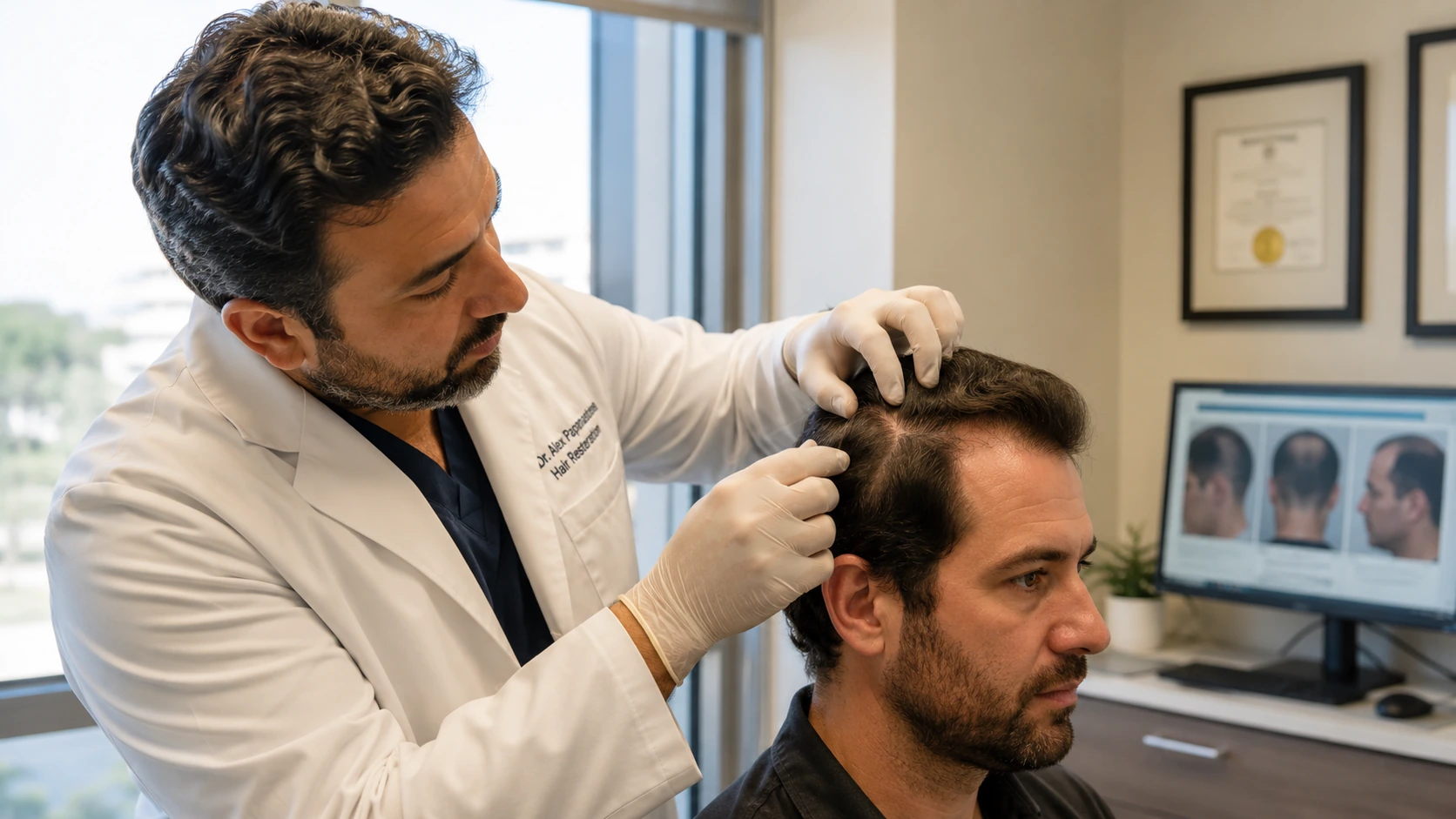
A consultation maps your donor supply, hairline design, and realistic graft count before any procedure is scheduled.
Natural FUE Results Start Before the Procedure
A successful transplant is not simply a matter of placing the largest possible number of grafts. The consultation should protect the donor area, anticipate future loss, and use the available grafts where they will create the greatest cosmetic improvement.
Donor Supply
Your donor density and hair characteristics determine how many grafts can reasonably be harvested without over-depleting the donor region.
Hairline Design
A natural hairline uses age-appropriate placement, irregularity, direction, and a softer transition rather than a perfectly straight or uniformly dense edge.
Coverage Priorities
Hairline, frontal density, crown, and overall coverage compete for the same finite donor supply, so the plan should prioritize what matters most.
Future Hair Loss
Transplanted follicles can remain while untreated native hair continues to thin, which is why long-term planning and discussion of non-surgical maintenance may be important.
Who May Be a Good Candidate for FUE?
FUE is most useful when there is enough healthy donor hair to create a meaningful improvement in the areas that matter most to the patient. A surgical consultation is required because graft demand and donor supply must be evaluated together.
- Men or women with pattern hair loss and adequate donor density
- Patients with a receding hairline, frontal thinning, crown loss, or selected areas of established hair loss
- Patients with realistic expectations about coverage, density, graft count, and the limits of donor supply
- Patients whose hair-loss pattern can be planned for over the long term rather than treated as a one-time cosmetic snapshot
- Patients in appropriate general health for an elective surgical procedure under local anesthesia
- Patients willing to follow donor-site and recipient-site aftercare during the early healing period
What We Evaluate Before Recommending FUE
Donor density and quality: We evaluate how much usable hair is available and how aggressively the donor area can safely be harvested.
Hair-loss pattern: Hairline recession, frontal thinning, crown loss, diffuse thinning, and prior transplant work require different strategies.
Graft demand: We estimate the graft count needed to create a visible improvement without promising density that the donor area cannot support.
Hairline design: The proposed hairline is planned around facial proportions, age, donor supply, and how the result should look years from now.
Medical and scalp history: We review medications, smoking, healing history, scalp disease, prior procedures, and health conditions relevant to surgery.
Non-surgical maintenance: PRP or medical hair-loss treatment may still be useful for protecting or supporting native hair that is not transplanted.
Before You Book an FUE Consultation
Question 1 of 4What are you most interested in improving?
Have you tried anything for hair loss already?
Where are you in the decision process?
How would you like to continue?
Thanks. Choose whichever way you’d like to continue:
How an FUE Hair Transplant Works
Donor Harvesting
Follicular units are harvested individually with a small punch from a donor region selected for long-term stability and adequate density.
Graft Handling
Extracted grafts are inspected, organized, and protected while recipient sites are planned and prepared.
Recipient-Site Design
Site angle, direction, spacing, and hairline transitions are planned to reproduce a natural growth pattern rather than a uniform row of grafts.
Individual Graft Placement
Follicular units are placed into the planned recipient sites, with finer grafts favored where a softer hairline transition is needed.
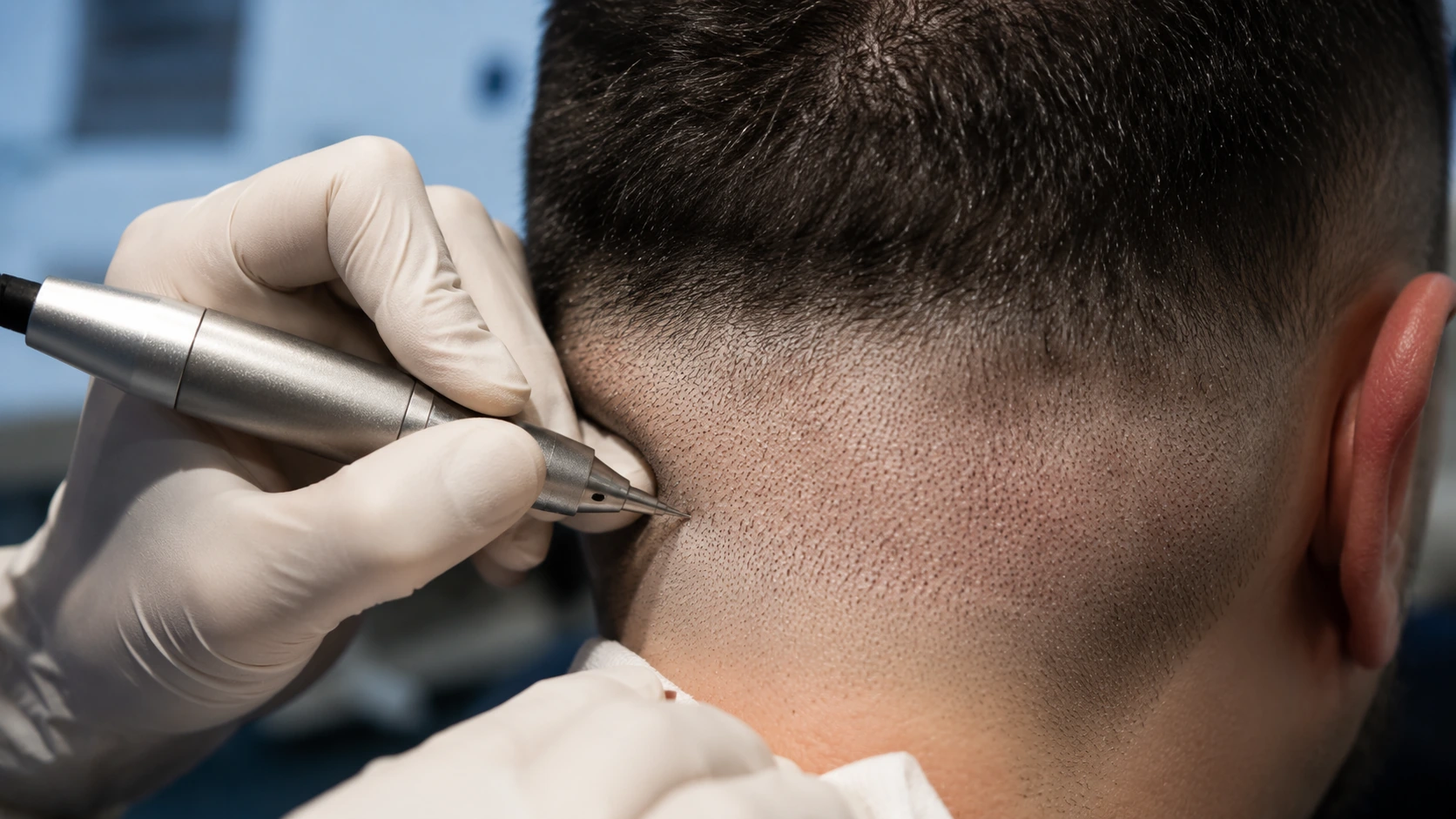
Individual follicles are extracted one at a time from the donor area using a small punch tool.
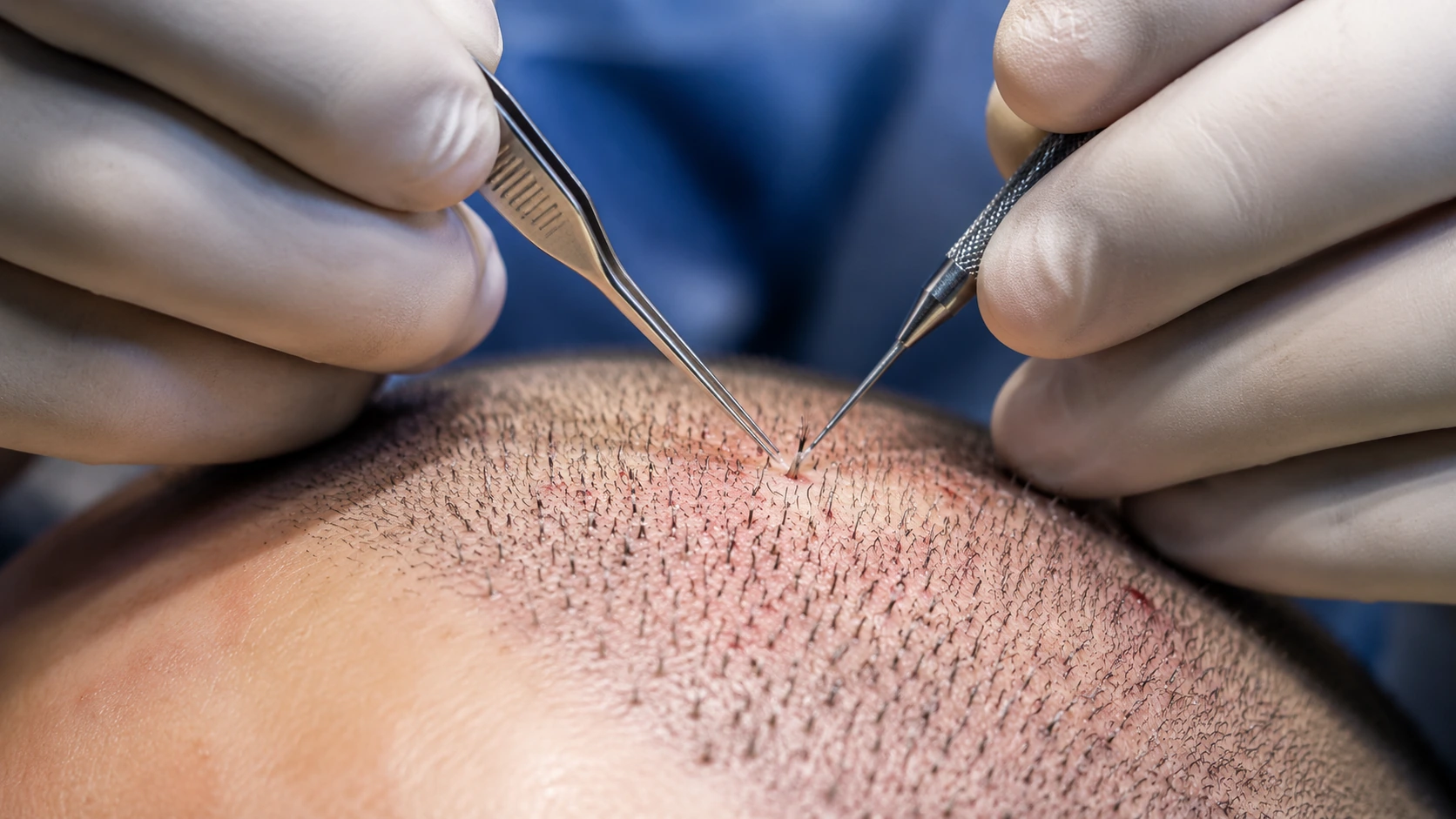
Grafts are placed one at a time to follow your natural hairline and growth direction.
FUE vs. Other Hair-Restoration Approaches
FUE vs. FUT Strip Surgery
FUE harvests follicular units individually and avoids one long linear donor scar. FUT removes a strip of donor scalp and can be useful in selected patients when maximizing graft yield from a session is a priority. Both are surgical transplantation methods.
FUE vs. PRP for Hair
FUE relocates donor follicles into areas that need added coverage. PRP is non-surgical and is used to support existing follicles, so it is more relevant when hair is still present and the goal is preservation or support rather than physically adding transplanted follicles.
FUE vs. Medical Hair-Loss Treatment
Topical or oral treatment may help preserve susceptible native hair but does not transplant follicles into a bald area. Many surgical patients still discuss medical maintenance because untreated native hair can continue to thin around a transplant.
When FUE May Not Be the Best First Step
Very limited donor supply, rapidly changing hair loss, active scalp disease, unrealistic density expectations, or a pattern better managed medically can make surgery a poor first choice. A good consultation should identify that before a procedure is booked.
Not sure whether you need FUE, PRP, medical hair-loss treatment, or a combination plan? Text us what you are seeing and we can help you choose the right consultation.
Text Us a QuestionWhat to Expect With an FUE Hair Transplant
Surgical Consultation and Graft Plan
Before schedulingYour surgeon evaluates donor supply, hair-loss pattern, hairline design, coverage priorities, and a realistic graft range before finalizing the procedure plan and quote.
Extraction and Placement
Procedure dayUnder local anesthesia, follicular units are harvested from the donor region and placed into recipient sites according to the planned angle, direction, and density.
Early Healing
First 10 to 14 daysScabbing, redness, swelling, tenderness, and visible healing are expected to varying degrees. You receive detailed washing, activity, sleeping, and graft-protection instructions.
Growth and Follow-Up
Months, not daysEarly transplanted hairs commonly shed before new growth begins. The result develops gradually, and density continues to mature through the later months of recovery.
Want to discuss graft count, donor supply, the 3,000-graft offer, recovery, or whether FUE makes sense for your hair-loss pattern?
Call (844) 759-6757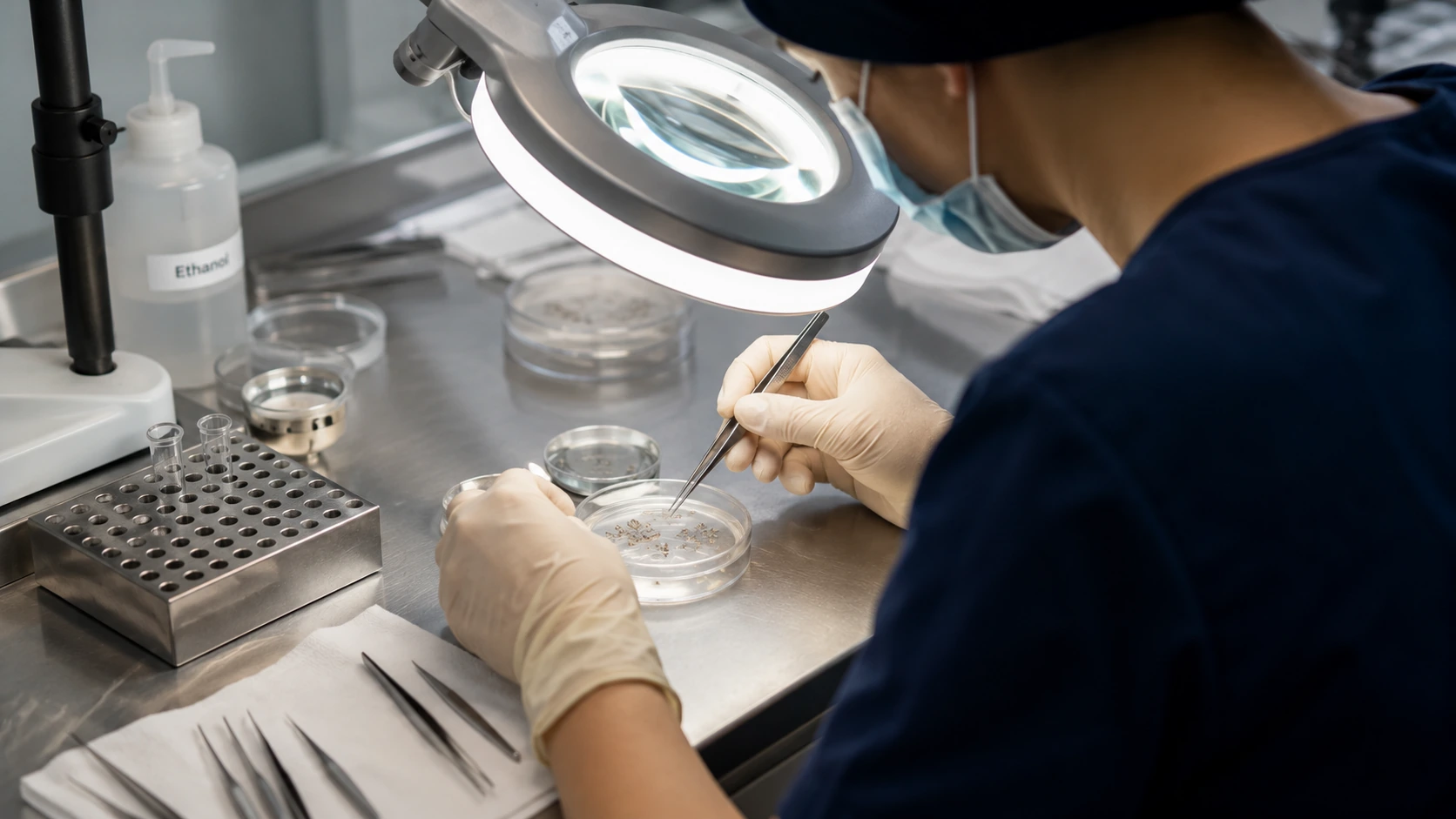
Grafts are sorted and kept viable under magnification while your surgical plan is finalized.
When Does Transplanted Hair Start to Grow?
Hair transplantation develops gradually. Individual timing varies, but the stages below are a practical way to understand why the final result cannot be judged during the first few months.
Shedding Phase
Many transplanted hairs shed after surgery while the follicles remain in the scalp. This temporary shedding is expected during early recovery.
Early New Growth
New hairs commonly begin emerging during this period, often appearing fine or uneven at first.
Increasing Coverage
More transplanted follicles enter visible growth and individual hairs continue to thicken and mature.
Later Maturation
Density, caliber, texture, and the overall cosmetic result continue maturing. Final timing varies by patient and treatment area.
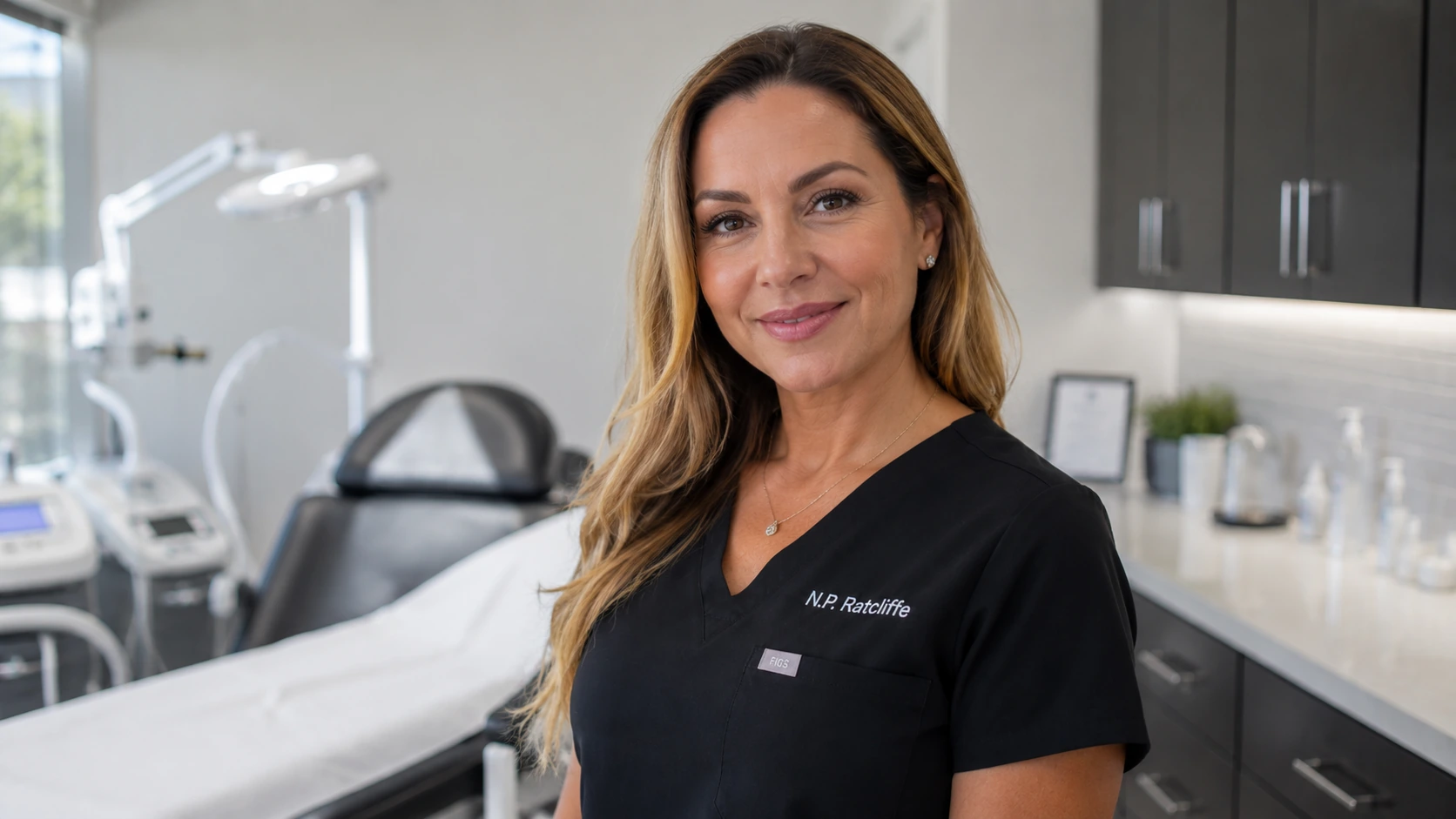
Our clinical team supports every step of your hair restoration process, from consultation through aftercare.
FUE Hair Transplant Pricing
Your final graft count is determined at consultation from your donor supply, hair-loss pattern, and coverage goals. The current menu includes per-graft pricing and a separate 3,000-graft special offer.
FUE Hair Transplant FAQs
Who performs the procedure?
Dr. Matt Tahsini performs the FUE procedure. He is a Diplomate of the American Board of Hair Restoration Surgery and a member of the International Society of Hair Restoration Surgery.
Does FUE leave a scar?
Yes. FUE avoids one long linear donor scar, but each harvested follicular unit leaves a small circular punch scar. With appropriate harvesting and healing, these dots are often difficult to notice at typical hair lengths.
How many grafts will I need?
Graft count depends on donor density, the size of the recipient area, hair caliber, hair-loss pattern, and the amount of coverage you want. Your surgeon estimates the appropriate range during consultation.
Is it normal for transplanted hair to fall out?
Yes. Many transplanted hairs shed during the first several weeks while the follicles remain in the scalp. New growth commonly begins later, often around months 3 to 4.
What is the recovery like?
Expect visible healing during the early period, including some combination of redness, crusting, swelling, tenderness, or donor-site sensitivity. Many patients can return to non-strenuous work within several days, but the grafts require careful protection during the first 10 to 14 days.
What does the 3000 Grafts Special Offer include?
The current offer is $10,000 compared with the $18,000 regular 3,000-graft value. If fewer than 3,000 grafts are clinically appropriate, the remaining graft balance is eligible for a complimentary scalp touch-up within the following 3 years. Eyebrow and beard transplants are excluded.
Is financing available?
Yes. Financing options include Cherry, Klarna, Affirm, and CareCredit, subject to lender approval and terms.
How long does an FUE hair transplant last?
Transplanted follicles are selected from donor areas intended to provide durable hair growth, but the surrounding native hair can continue to thin with time. Long-term planning may include medical treatment, PRP, or future surgical work depending on the patient’s pattern of loss.
When will I see the final result?
Early new growth commonly begins around months 3 to 4. Coverage and hair caliber continue to develop over the following months, with later maturation often assessed around 12 to 18 months.
FUE Hair Transplant in Torrance and the South Bay
Visit Skin Works Medical Spa at 2573 Pacific Coast Highway, Suite B in Torrance. Hours are Monday to Saturday 9:00 AM to 7:00 PM and Sunday 10:00 AM to 5:00 PM. We see hair-restoration patients from throughout the South Bay and greater Los Angeles.
Complimentary Surgical Consultations Find Out What FUE Could Realistically Do for Your Hair Review your donor supply, hairline design, graft estimate, recovery, pricing, and the 3,000-graft offer before making a surgical decision. |
Medical Disclaimer: FUE hair transplant is an elective surgical procedure. This page is for informational purposes only and does not constitute medical advice. An in-person surgical consultation is required to determine candidacy, donor availability, graft count, and the appropriate treatment plan.
Scarring and risks: FUE does not create one long linear strip scar, but it does create small punch scars in the donor area. Potential surgical risks include bleeding, swelling, infection, folliculitis, altered sensation, visible scarring, temporary shedding of native hair, graft loss, donor over-harvesting, and an unnatural result. Individual risk varies.
Results: Hair growth, density, survival, caliber, and maturation vary by patient. Native non-transplanted hair may continue to thin over time, so long-term hair-loss management may be recommended.
Provider: Dr. Matt Tahsini is a Diplomate of the American Board of Hair Restoration Surgery and a member of the International Society of Hair Restoration Surgery.
3,000-Graft Offer: The current scalp hair-transplant offer is $10,000 compared with the $18,000 regular 3,000-graft value. If fewer grafts are clinically appropriate, the unused graft balance is eligible for a complimentary scalp touch-up within the following 3 years. Eyebrow and beard transplants are excluded. Offer terms may be modified or ended by Skin Works.
Financing: Cherry · Klarna · Affirm · CareCredit options are provided by third-party lenders and are subject to approval and lender terms. Skin Works Medical Spa, 2573 Pacific Coast Highway, Suite B, Torrance, CA 90505, (844) 759-6757.